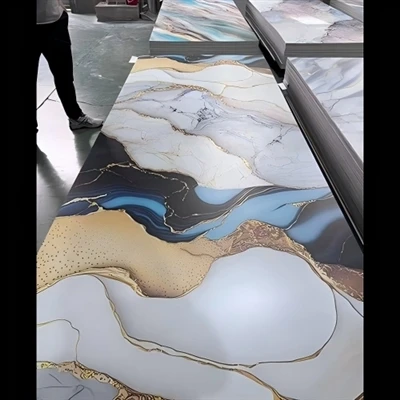
Particleboard is a type of board made primarily from wood chips, sawdust, shavings, or other plant fibers (such as bamboo shavings, straw, etc.), mixed with urea-formaldehyde resin or other adhesives, and pressed under high temperature and pressure. Its production process mainly includes the following steps:
1. Raw material preparation: Collect wood processing residues (such as scraps, sawdust) or other fibrous materials, screen and dry them to produce uniform particles.
2. Gluing treatment: Mix the particles with adhesives, ensuring the particle surface is evenly covered with adhesive.
3. Laying and forming: Lay the mixed particles into molds to form a board blank.
4. Hot pressing: Press the board blank into a board using high-temperature and high-pressure equipment.
5. Post-processing: Perform processes such as cutting, sanding, and surface treatment (such as veneer) on the board.
The manufacturing process of particleboard is relatively simple, and the raw materials are widely available, giving it a significant advantage in cost control. However, its performance largely depends on the quality of the raw materials, the type of adhesive, and the sophistication of the production process.